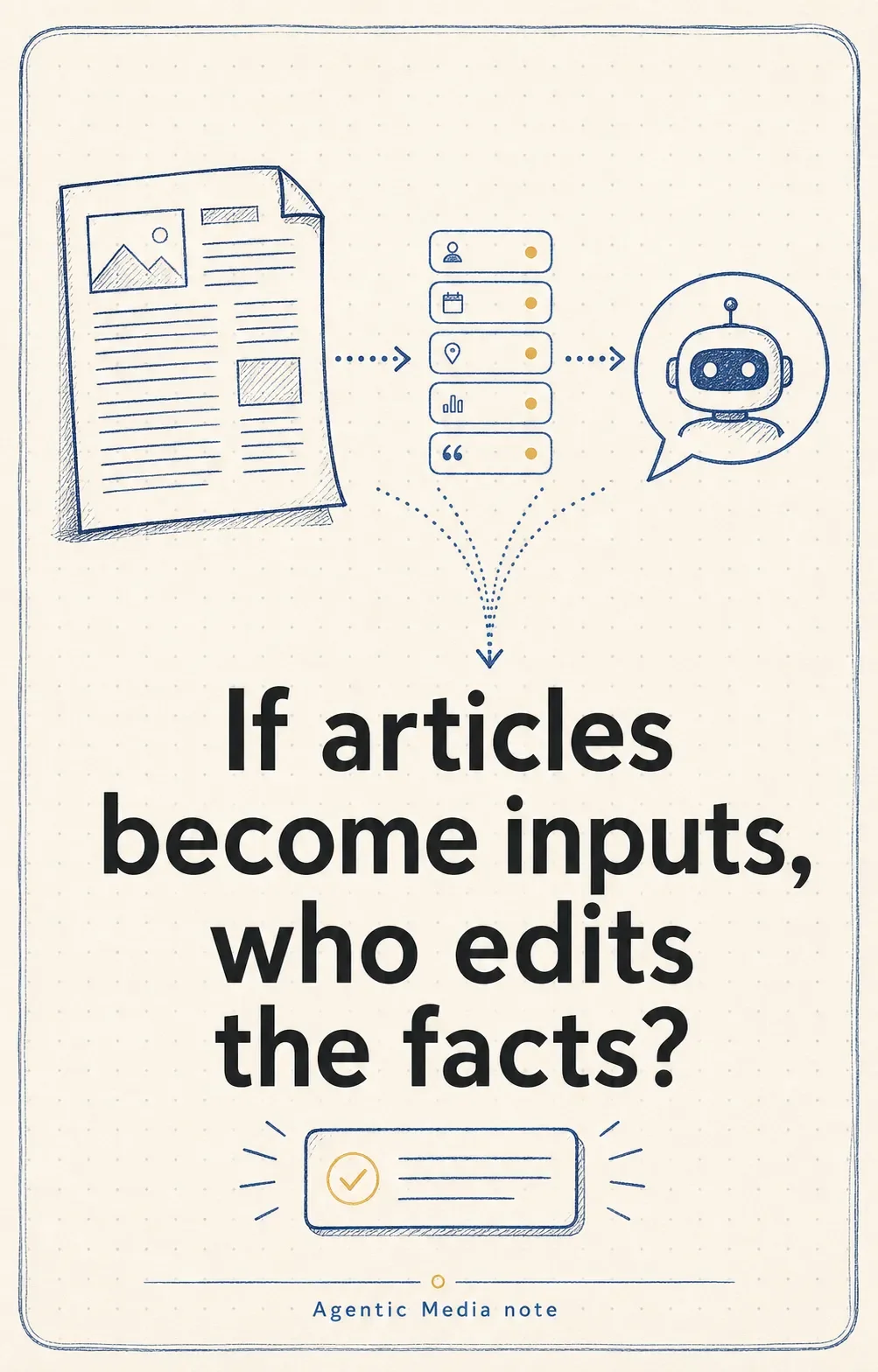

Daniel Trielli predicts a form of "agentic journalism" made for AI summarizers and chatbots, not only for direct human readers. His argument is blunt: AI systems do not need ledes, nut grafs, or narrative flow as much as they need user-relevant, novel, machine-readable content. 1
That fits the broader definition of agentic AI: IBM describes agentic AI as systems that can pursue a goal with limited supervision, coordinate subtasks, call tools or data sources, and take action. 2
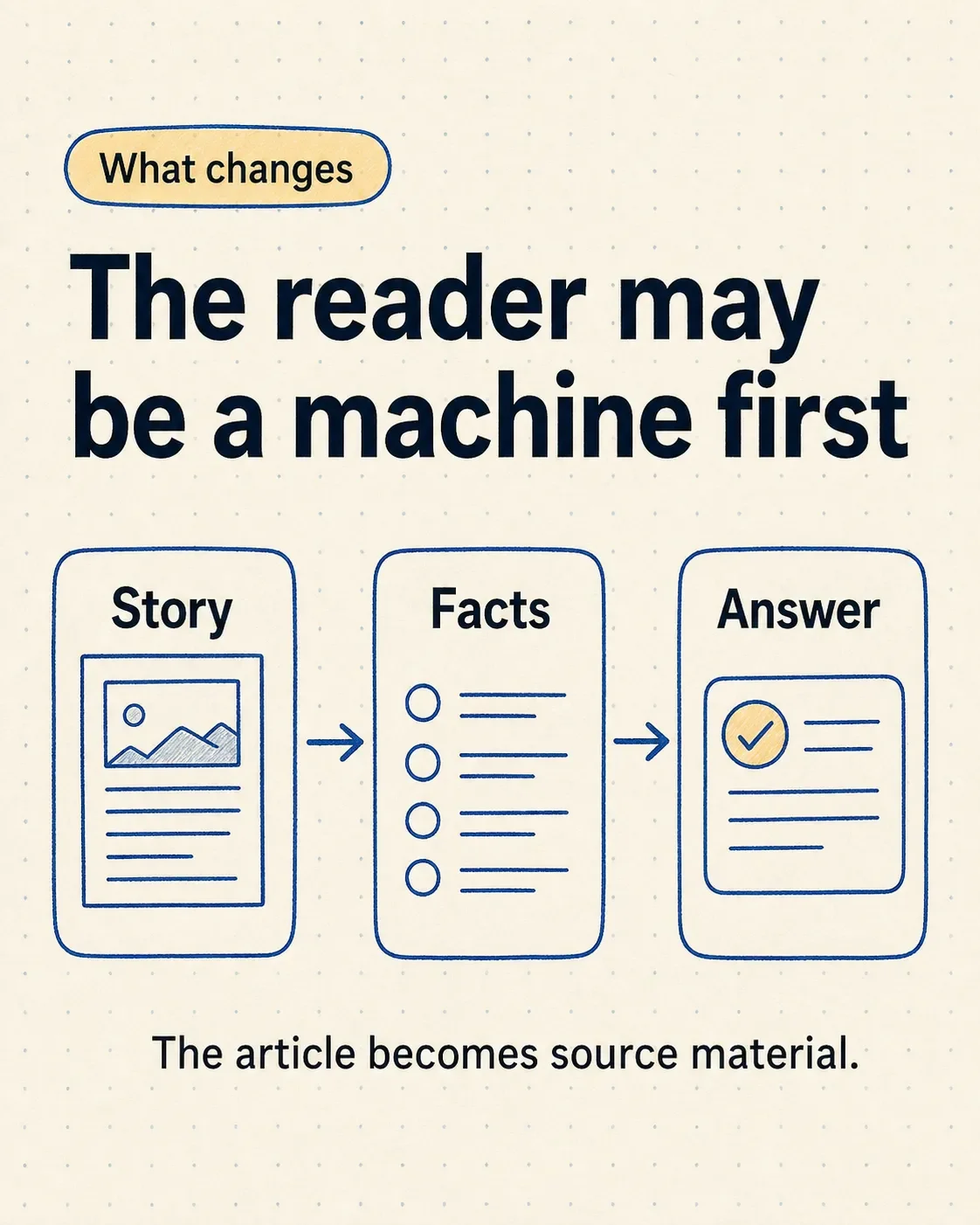
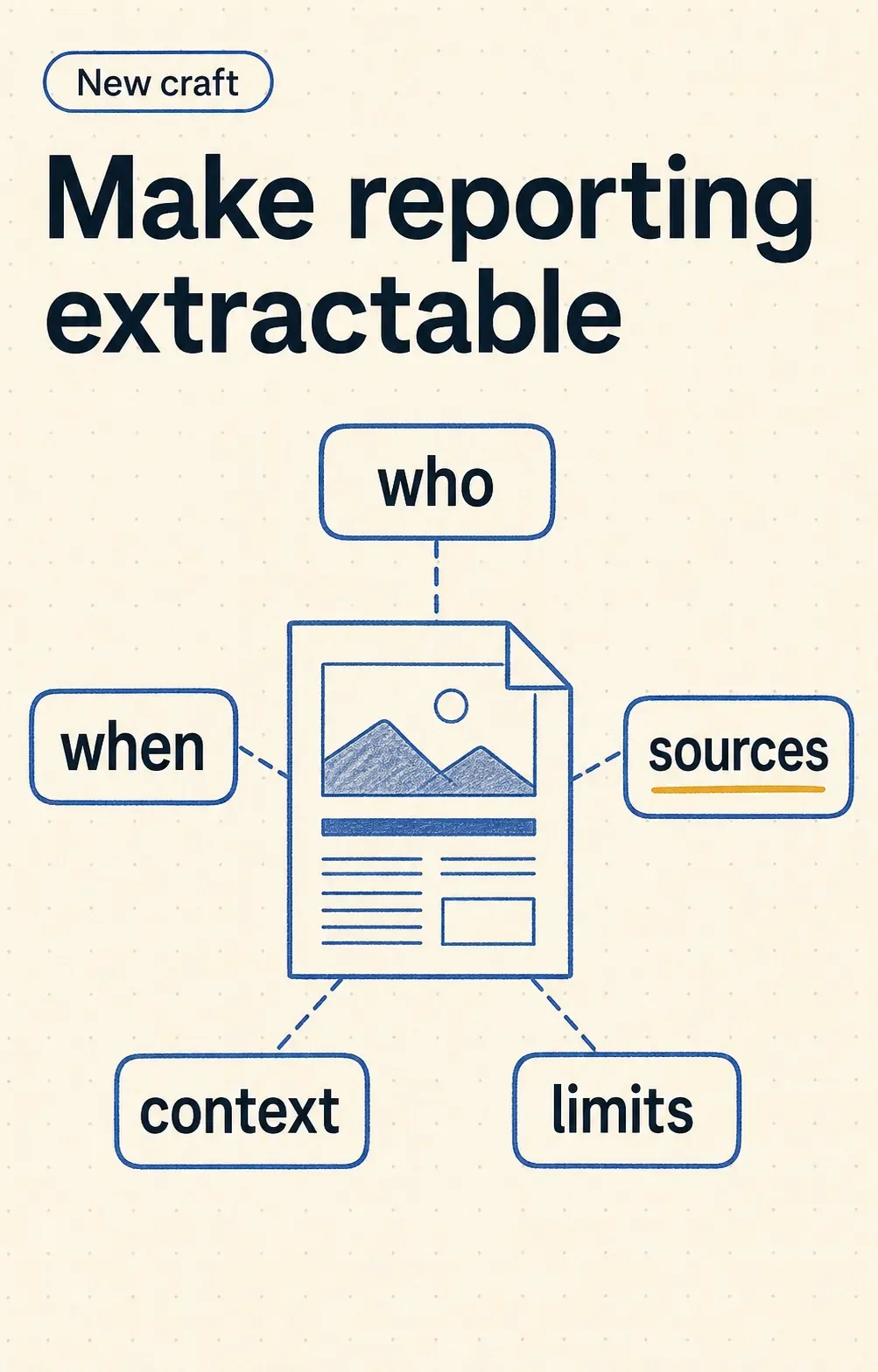
The sharper media shift is format, not authorship. In Trielli's version, the reporter supplies the five Ws, quotes, context, timestamps, source links, and media links. Editors then focus more on accuracy and machine readability, because a downstream agent may ingest the material and reformat it for the user. 1
My read: this is Agentic Media at the article-format layer. The story is still reported by humans, but part of the audience is now a machine that decides which facts travel onward.
The risk is editorial control. Trielli warns that reporting and editing could shrink into data entry, while journalism becomes more dependent on the visibility metrics of large technology platforms. 1
Readers are not automatically asking for every AI news format, either. Nieman Lab's coverage of the Reuters Institute Digital News Report 2025 says interest was below 30% for any single AI-powered personalization option, even though more than half of respondents in most countries were interested in at least one. 3
So the open question is practical: should newsrooms make cleaner source material for agents, or should they spend more energy forcing agents to quote better, preserve context, and show limits?
Discussion question: if an AI answer is the first place many readers meet a story, what should the newsroom optimize for first: visibility, control, trust, or something else?
Comments
Sign in to comment.